

Master
The Master’s degree in Energy is supported by the ENERGY-Lab research unit at the University of La Réunion.
The programme draws on the unit’s technological platforms, including a BSRN station (*), developed through research and development projects supported by regional and European funding (ERDF, H2020). They provide an interdisciplinary research environment unique in the Indian Ocean region and enable students to:
- study the impact of global changes on variable renewable energy resources,
- test real-time energy management strategies, incorporating resource forecasting,
- design fuel cell and electrolyser cells,
- optimise the performance and ageing of fuel cell and electrolyser systems.
(*) The BSRN (Baseline Surface Radiation Network) is a project of the Data and Assessments Panel of the Global Energy and Water Cycle Experiment (GEWEX) under the auspices of the World Climate Research Programme (WCRP). As such, it aims to detect significant changes in the Earth's radiation field at the surface that may be related to climate change (https://bsrn.awi.de).
 |
Gain the essential skills to:
|
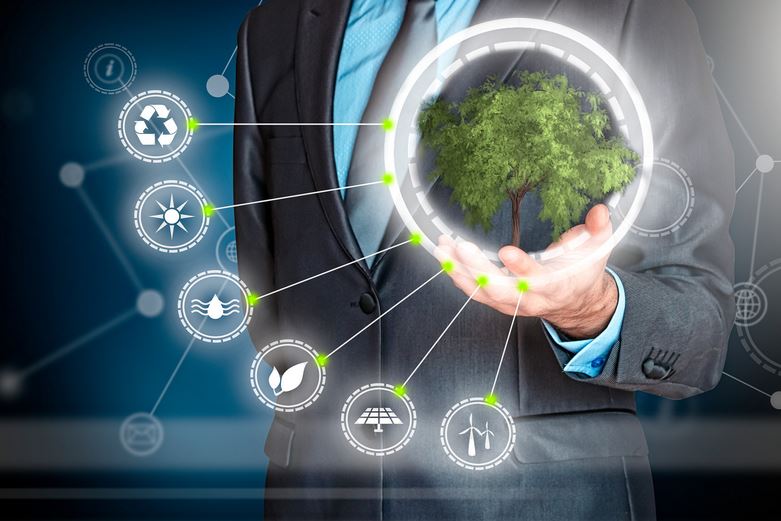
- OS1: Renewable energies: variability in Réunion and tropical areas, metrology and modelling
- OS2: Hydrogen energy: design, diagnosis, control
- OS3: Electrical energy: deployed electronic systems and instrumentation
 |
The professional objectives are to train high-level researchers and executives (engineers, experts, consultants, etc.). To this end, the programme enables graduates to quickly access positions of responsibility by developing scientific and technical skills, as well as various transversal competencies, throughout their studies. |
The Master’s degree in Energy is a two-year programme worth 120 ECTS credits (Bac+5). Teaching is in French, on the Moufia campus in Saint-Denis.
Master 1
- Two teaching semesters
- A professional placement of at least 8 weeks
Master 2
- One teaching semester
- A professional placement of 4 to 6 months
Teaching is based on projects, laboratory experiments and hands-on training in simulation, instrumentation and data acquisition software.
Course details are available on the official programme page (in French).
 |
ApplicationsAdmission is based on an application file. The programme is open to holders of a Bac+3 degree or equivalent, in particular a science bachelor’s degree. The application schedule and requirements are published on the official programme page (in French). |
Students holding or enrolled in a third-year bachelor’s degree (L3) submit an admission file. Other applicants submit a file for the validation of prior studies or experience.
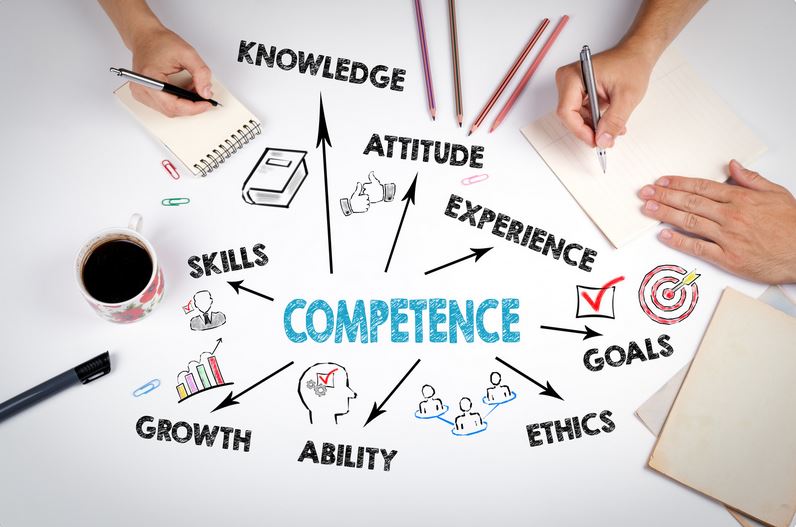 |
Expected skills upon completion of the Master’s degree: |
Scientific skills:
- Rigorous approach and scientific reasoning
- Ability to prepare scientific and technical reports
- Capacity to acquire new knowledge and techniques – responsiveness
- Analytical thinking in complex situations – interdisciplinary approach
- Skills in innovation and technology monitoring
Technical skills:
- Assess the potential of technologies for new applications
- Design and optimise efficient and safe renewable energy systems
- Use and master new technologies available in economic and/or industrial sectors
Organisational skills:
- Ability to work independently and with responsibility
- Ability to work within time constraints
- Research methodology and document and data processing
- Project management and coordination
Interpersonal skills:
- Ability to communicate clearly and precisely using appropriate language
- Proficiency in technical and scientific English
- Ability to work as part of a project team
- Capacity to build professional relationships with partners
Further studies:
PhDCareer opportunities:
- Research and development – innovation
- Production engineer in the energy sector
- Research engineer or Assistant Project Manager / Expert for local and regional authorities and administrations in all fields related to energy and energy efficiency
 |
Future Master’s students within the ENERGY-Lab research unit will have the opportunity to engage with energy stakeholders in non-interconnected zones (NIZ), all within an international environment. |
Teaching is provided by ENERGY-Lab researchers, together with researchers from the University of Bourgogne-Franche-Comté (Belfort) and the University of the Mascareignes (Mauritius).
Professionals from the TEMERGIE cluster also contribute to the programme, including EDF, SIDELEC and SPL Horizon Réunion.
 |
|
Climate
Smart Grid Renewable Energies
Hydrogen
Photovoltaics
Wind Energy
NIZ, Non-Interconnected Zone
Sustainable Development